
Whitestone Infant School
Writing
Writing
At Whitestone Infant School, we believe that writing is integral to our children’s whole language experience.
We believe that speaking and listening with confidence are significant factors in developing effective writing.
Reading and writing are closely connected and mutually supportive; we read as writers and write as readers.
At Whitestone, writing is framed within recognisable text-types or genres, using a combination of Mighty Writer and Talk For Writing as teaching tools to support the development of writing skills.
Writing is accessed through a planned teaching sequence, creating a learning journey, building up to an extended piece of writing. Children only write for an extended period of time once they reach Year Two, with children in Year One producing their extended piece over a number of days.
The Writing Framework 2025
In 2025 the DFE published a Writing Framework for schools,
- Is based on teachers’ experiences, classroom observations and research, as well as the contributions of experts.
- Gives simple, practical advice about how to teach writing to pupils in the reception year, key stage 1 and key stage 2
- Provides guidance on how to help pupils who need more support
The Talk for Writing approach is embedded into the teaching sequence of writing from Reception to Year Two. It enables children to read and write independently for a variety of audiences and purposes in different subjects. A key feature is that children internalise the language structures needed to write through ‘talking the text’, as well as close reading. The approach moves from dependence towards independence, with the teacher using shared and guided teaching to develop the ability in children to write creatively and powerfully. Children learn specific actions to go with words, to support them orally when retelling a story or event.
Whitestone's Talk For Writing actions
Mighty Writer 
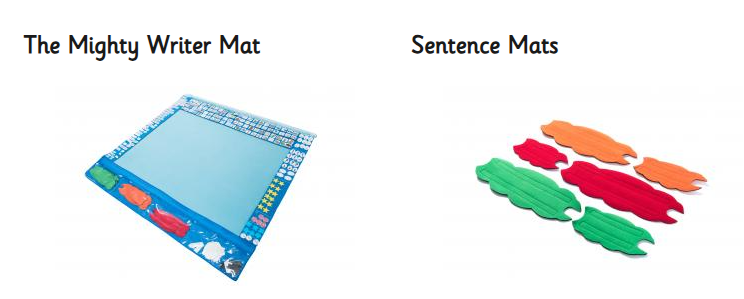
Mighty writer is a visual teaching resource that simplifies the process of learning to write. It starts in Reception and follows on into Year One. It is used to support the teaching of narrative and non-narrative text types.

Handwriting 
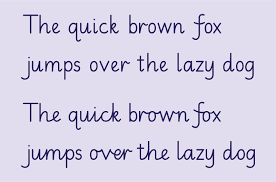
At Whitestone Infant school, we believe that neat, well-formed handwriting and presentation of written work helps to raise standards. Children have discreet handing sessions, in addition to the handwriting focus in phonics.
Pupils take pride in, and have a sense of ownership of their work. Legible work and good presentation enables others to comprehend the work presented which in turn enables success and confidence. We use the Nelson Handwriting scheme to support children to learn to correct formation of the letters. We start to teach joined writing in Year 2
The National Curriculums
The statutory guidelines for the Early Years Foundation Stage
Children are taught to use their phonic knowledge to write words in ways which match their spoken sounds.
They are taught to be able to write some irregular common words. They are taught to write simple sentences which can be read by themselves and others and they are taught to spell some simple words correctly and others are phonetically plausible.
Key Stage 1
The Programmes of Study for writing consist of two dimensions:
Transcription (spelling and handwriting). Children need to be taught spelling patterns and understanding of word structure as well as developing good phonic knowledge. They need to be taught to write legibly with speedy accurate handwriting.
Composition (articulating ideas and structuring them in speech and writing) Children need to be able to articulate and communicate ideas and organise them coherently for the reader. This requires clarity, awareness of the audience, purpose and context, and an increasingly wide knowledge of vocabulary and grammar